Polished Concrete Garage Floors in Westchester, CT
Contact Jak's Colors Today
Ready to enhance your space? Call us now to schedule your installation and get started on transforming your floors.
jakscolors
October 31, 2025
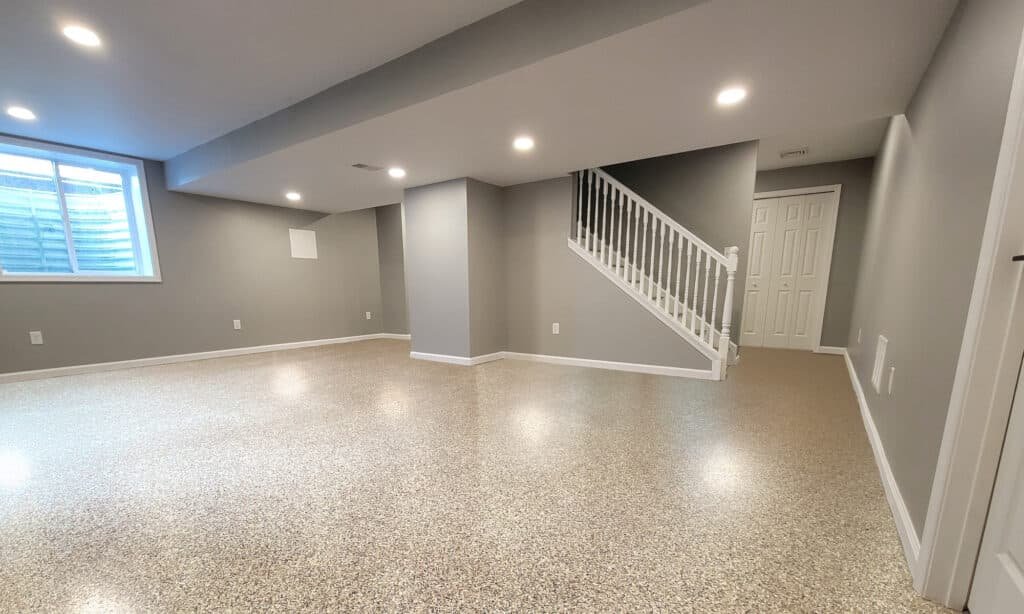
Basements have evolved from simple storage areas to functional spaces such as home offices, gyms, and entertainment rooms. However, these spaces are often the hardest to heat and cool due to their underground location and humidity challenges. A little-explored but highly effective solution is installing an epoxy basement floor, not only for its durability and aesthetics but also for its potential to improve your home’s energy efficiency.
As the Epoxy Flooring Blog explains, “Epoxy floors not only protect concrete, but they also enhance thermal efficiency when paired with heating systems.”
Epoxy has a lower thermal conductivity than bare concrete, helping retain heat generated in the basement during winter. This translates to less heating usage and a more comfortable environment year-round.
Basements commonly suffer from high humidity, forcing dehumidifiers and air conditioning systems to work harder. By creating a waterproof barrier, epoxy floors reduce moisture penetration and condensation, easing the energy load for climate control. According to ConcreteNetwork.com, “Sealing underground floors with advanced coatings can reduce indoor relative humidity by up to 30%, optimizing HVAC usage.”
Epoxy floors are ideal for use with in-floor radiant heating systems, allowing even heat distribution without excessive absorption, maximizing system efficiency. This combination can significantly reduce energy consumption compared to traditional flooring.
Beyond thermal benefits, epoxy protects the concrete from cracks, abrasion, and spills, meaning fewer repairs and less energy and resources spent on maintenance.
Metallic and reflective epoxy finishes not only add style but also reflect natural and artificial light, reducing the need for additional lighting and lowering energy use.
Learn more about basement moisture control and indoor humidity from the U.S. Department of Energy
Yes, by reducing heat loss and controlling moisture, it lowers the workload of heating and dehumidifying systems.
Reflective or metallic epoxy coatings help retain temperature and enhance light reflection.
Absolutely. Combining epoxy with radiant heating maximizes energy efficiency.
With proper care, 15–20 years or more.
Yes. Epoxy creates a sealed and waterproof barrier that prevents moisture penetration and condensation in basements.
Absolutely. Epoxy coatings—especially metallic or high-gloss options—reflect natural and artificial light, helping brighten the basement space
Ready to enhance your space? Call us now to schedule your installation and get started on transforming your floors.
Ready to Upgrade Your Floors?
⭐⭐⭐⭐⭐ Trusted by 120+ happy clients in Connecticut
We usually respond in under 2 hours.
We’re here to help you design, quote and install the perfect flooring — quickly and hassle-free.
Fill out the form and let’s start your transformation.
Get Your Free Flooring Quote!


Transform your floors with Jaks Colors. Our expert team delivers high-quality polished concrete and epoxy flooring solutions for residential and commercial spaces. Contact us today for a free consultation and discover the difference we can make.
© 2026 Jask’s Colors – All Rights Reserved. Designed and developed by thefloorcrew.co